What Year Is This?
Rituals of anachronism: Venezuela

The obscenity of state violence is very often matched by its absurdity. Against the incomprehensible terror of human destruction, the causes raised for willfully bringing it about begin to look callous and vicious, yes, but also thin, flimsy, ridiculous. This is why the Catechism, for example, outlines quite strict conditions for a just war, requiring even “serious prospects of success,” and then under the broader aegis of defense. It is a far more exacting standard than any society has followed, but, apart from its hard truth, it can still be practical for just that reason: as a check against the hubris of a presumed mandate, whether of the electorate or of heaven. It is also a reminder that war is not only a threat to lives and treasure, but a violation of basic human integrity. It is not only dangerous and terrifying; it is insulting.
But recognizing this, simply reciting the words, hardly does any good. The bombing of Caracas and other Venezuelan locales on Friday night was carried out in the name of self-defense and the safeguarding of peace, as were the invasions and occupations of Iraq and Afghanistan, and even the ouster of Panama’s Noriega in 1989, to name only the examples that having springing to many minds lately. The global liberal order was predicated on the introduction of principles of justice and attendant procedural mechanisms into the turbulence of global affairs, but they have proved just as semantically pliant as any code of ethics when uttered by a sufficiently powerful state.
Our government’s latest adventure does not appear, at the time of writing, fated to become the war many feared it would be. It was, characteristically for this administration, a smash and grab job. (What “running” Venezuela in anticipation of a “just transition” means exactly is, at present, unclear, though it’s possible to make some guesses, particularly where the stewardship of the country’s oil reserves are concerned.) But it was attended to by all the rhetorical rituals of social fortification that usually lead to war-making. In brief: ascriptions of illegitimacy and ill-intent against the target by the leaders, followed by expressions of hesitancy by the official opposition, who nevertheless grant the premise of the initial declarations.
What interests and, in this case, somewhat dazes me is the resilience of this rituals in the face of a looming or, indeed, incipient catastrophe. The operation carried out the other night was, in terms of policy orientation, a twilight-zone episode in which midcentury CIA strategic goals were carried out with War on Terror tactics, with only a perfunctory effort made to manufacture the consent of the population. For someone my age, whose political consciousness was shaped, not long after the formation of my literal consciousness, by the insanity of the Iraq War, it is yet another anachronism, yet another apparent reversal of the most basic insights of recent history.
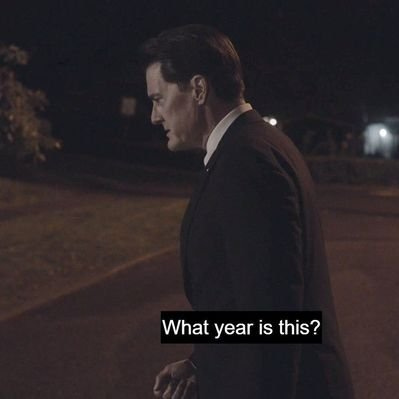
Of course, one never assumes that the masters of war will ever see justice, nor even that they’ll necessarily learn, that is to say, really internalize the gravity of the havoc they wreak. But one does expect to see a certain kind of practicality, a political savoir-faire, or even a desire to mark oneself out by means of innovation or simple variance. To see all the old hits being trotted out, going back even to the Monroe doctrine, is a genuinely vertiginous experience. We are all, or should be, like Dale Cooper (or not Dale Cooper) in the finale of Twin Peaks, standing on the street in the dark in front of Laura Palmer’s house (or not Laura Palmer’s house) asking, as though truly uncertain, what year this is.
Many are, in their circumscribed ways. The Washington Post has seen a ghost. Several New York Times editorials, including one by the board itself, point to Iraq, Libya, and other misadventures as the obvious precedents for this one. (Both papers, it should be said, adhered to what has apparently been standard practice and sat on leaks that the raids would take place until after they had been carried out.) But in the midst of all this, the same throat clearing, the same equivocation, the same acceptance of the premise, even when the premise as stated is utterly beside the point, all because of our bone-deep preference, reinforced at every crucial juncture, for consensus over justice. It is to my mind further evidence that Trump represents not a divergence from our political establishment but an arrival at its logical conclusion—or one of its logical conclusions—that these rituals are being performed even now. The question for any political future remains the possibility of rewriting them.